Friday, May 14, 2010

Just the good stuff


So often, when we buy things we end up paying for fluff. Brand names, labeling, and even scary-sounding chemicals that no one without a phD can pronounce correctly.

That's the great thing about buying from a small bath and body company. You're getting just the goods.

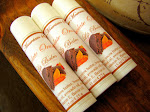
And that's the premise behind a wonderful shop on etsy by that same name - justthegoods. They make handcrafted shaving solids, body butters, natural toothpaste, bath melts, and some facial skin care items "without unnecessary exposure to petrochemicals, parabens, sulfates, phthalates, and artificial fragrances, dyes and flavours."

From their Etsy shop: "Every day indulgences shouldn’t cost the earth or our health. It is affordable to look and feel great without unnecessary exposure to petrochemicals, parabens, sulfates, phthalates, and artificial fragrances, dyes and flavours. Everything I make features “just the goods” and nothing else. Most of my items are made without animal-derived ingredients and I am striving toward a 100% vegan selection."


Learn more about this company at justthegoods.wordpress.com/ or visit their website at www.justthegoods.net/

Monday, May 10, 2010

Tap, tap, tap!

It's the crazy busy time of year when the birch sap is running!

We tap a few of the hundreds of birch trees on our property every year. The sap is wonderful stuff. We drink it, add it to soaps, make jellies and mustard from it, and this year we hope to make a bit of our own birch beer as well.

So, what's so great about birch sap? Birch is a natural analgesic, antiseptic, astringent, purifier, disinfectant, diuretic, fever reducer, insecticide and tonic.

How can it do all that? Birch actually contains significant amounts of methyl salicylate (the compound closely related to aspirin). The bark and leaves are often used in Alaska Native and folk medicine for headache and rheumatic pain, and are recommended for use in liniments and massage oils for sore or strained muscles. Birch infusions are often recommended for people with urinary problems and kidney stones. Birch twig facial steams are reported to be good for clogged sinuses, and supposedly birch decoctions added to one’s bath water will help those troubled by skin eruptions. A home birch tea rinse is recommended for scalp infections and dandruff. Oil of birch tar is used in Russia to repel bugs.

Not bad for something that grows free in your own back yard!

Plus, it tastes good. Like the sap of the maple tree, birch sap can be made into a delicious syrup. However, it takes enormous amounts of sap to make the syrup - usually about 80 gallons of sap will product 1 gallon of syrup. That's a lot of tree tapping. Instead of syrup we use the sweet sap for jellies and in mustards. If there's time, I'll sometimes boil it down and make a crunchy candy for the kids.

We don't claim that any of our products that contain birch have any medical qualities. For example, our birch sap soaps won't make your muscles stop aching or your fever go down. For one thing, any of those qualities in the sap would be seriously diminished (if not totally erased) by the saponification process. For another thing, all our soaps do is makes you nice and clean and good-smelling. The sap does make the soap lather beautifully though.

We do put the sap into some of our lotions and facial toners though ... as do many high-end, spa-quality cosmetic lines. BelAir Beauty sells a purifying cream for acne containing birch sap for $54 (1.7 ounces), or next time you're shopping at Saks 5th Ave you can pick up a bottle of Fresh's Men's Skin Soother with birch for $38 (1.7 ounces).

Ours is a little more reasonably priced.

Tapping the trees doesn't hurt them at all. We love our trees, and want them to be around for a long, long time and so we take good care of them. We tap each tree for a day or so, and stop when the tree starts putting out leaves. Then we patch up the hole with a bit of tree putty and pretty soon you'd never know there was ever a hole there at all.

The sap only runs for a few days or maybe a week or two each year, and when it's done, that's it until the next year. And just about the time the birch sap ends, the dandelions start popping up ... which begins the crazy time of year when we pick dandelion flowers like crazy!

But that's another blog post.

Thursday, May 6, 2010

Germs, bacteria, fungus - 100% natural!

In 1993, an outbreak occurred at the cancer ward of the University Hospital in Basel, Switzerland. Almost half of the patients tested were found to be infected or colonized with the Paecilomyces lilacinus fungus. Nine of the patients had skin eruptions due to the infections. In one patient, the infection spread to the kidneys. Two patients died.

And how did the patients become infected? According to the Annals of Internal Medicine (published by the American College of Physicians), "The outbreak was ultimately traced to a contaminated, commercially available, pharmaceutically prepared skin lotion." The outbreak ended after the skin lotion was recalled.

As a maker of bath and body products, I have a very, very healthy respect for bacteria, germs and fungus. I do not want them anywhere near my products.

And yet, as a consumer - and as a mother - I want to make and use products that are as natural as possible. After all, this is one of the main reasons I make these products, to get away from the synthetic, petroleum-based, chemical-laden junk on store shelves. So the question is, how "natural" is safe? Which is better, "all-natural" or "natural but with preservatives?"

For me, after several years of studying preservatives and the nasty little bugs they are designed to kill, the answer is simple. The preservatives win, hands down. They may not be "natural," but not everything "natural" is good. Mold is natural, and so is E. Coli bacteria. Death is "natural."

I cringe every time I see "all-natural" lotions and creams listed for sale being touted as "chemical-free," with no preservatives listed in their ingredients. It is literally impossible to prevent the inclusion of some germs and bacteria into a product, unless you make it in an autoclave. Even the best good manufacturing practices only call for a work area to be sanitary, not sterilized. And water - a necessary ingredient in products like lotion and cream - creates the ideal breeding ground for bacteria, fungus and mold.

Now, some people truly believe that Vitamin E or grapefruit seed extract serve as natural preservatives. They are dead wrong. Both are antioxidants, not antibacterial or anti-fungal agents. In other words, they are great for keeping the oils in the products from going rancid as quickly (oxidizing). They do nothing to kill or prevent the growth of the kinds of nasties that can literally eat your skin off.

Any doctor will tell you that the majority of bacterial skin infections are caused by the gram-positive bacteria Staphylococcus and Streptococcus species. In 1997, after a c-section, I developed a hemotoma that became infected with MRSA - a medically-resistant staphylococcus (staph) infection - and it almost killed me. I spent a week in the hospital in a semi-conscious state as specialists shook their heads over me. I know gram-positive bacteria. They are not friends of mine.

So, given a choice between bacteria and chemicals, I go with chemicals. Fortunately there are some good preservatives that are free of parabens and formaldehyde, which are possible carcinogens and some of the things people looking for "natural" products tend to want to avoid. One of those preservatives is Optiphen, which we use in most of our products requiring a preservative. We even use it in our body butters and balms, even though they do not contain water, because people usually scoop those with their fingers.

Our advice? Run, don't walk, away from products that don't contain a preservative. Because if the pros can't manage to keep their products uncontaminated (just last summer, the FDA announced the recall of skin sanitizers and lotions marketed by Clarcon Biological Chemistry Lab), how can the little guys manage it?